Graded Card Storage: Digital vs Physical Solutions
Digital vaulting outperforms home safes for investment-grade graded cards, while a hybrid approach balances security with hands-on enjoyment.

Graded Card Storage: Digital vs Physical Solutions
How should you store your graded cards? It depends on your goals. Physical storage offers hands-on access, while digital platforms like ShowVault provide security, scalability, and easy management. Here's a quick breakdown:
-
Physical Storage: Ideal for smaller collections or sentimental items. You control access but face risks like theft, damage, and maintenance costs.
-
Digital Storage: Perfect for high-value cards. Provides top-tier security, insurance, and analytics for $24.95/quarter. Great for frequent trading or large inventories.
-
Hybrid Approach: Combine both - store valuable cards digitally and keep personal favorites at home.
Quick Comparison
| Criteria | Physical Storage | Digital Storage |
|---|---|---|
| Security | Prone to theft, fire, and damage risks | Professional vaults with 24/7 monitoring |
| Accessibility | Immediate access, no remote viewing | 24/7 access online, physical cards require shipping |
| Cost | High upfront for safes & insurance | $24.95/quarter; includes insurance |
| Scalability | Limited by home space | Unlimited capacity |
| Privacy | Fully private | Ownership tracked on platform servers |
Bottom line: Physical storage works for personal collections. For investments, digital solutions like ShowVault simplify security and management.

Physical Storage Options
Physical storage remains a popular choice for collectors, even with the challenges of environmental risks and security concerns.
Advantages of Physical Storage
One of the biggest perks of physical storage is control. You can access your cards anytime, without depending on an internet connection or third-party services. Plus, owning the cards physically gives you complete, tangible ownership of your collection.
Another key benefit is privacy. Unless you choose to share, no one else knows what you own, where it’s stored, or how much it’s worth.
Physical storage also allows for customization and personalization. You can organize your cards by player, team, year, or condition. When it comes to displaying your collection, options are nearly endless - whether it’s wall-mounted cabinets, sleek acrylic blocks, or portable cases for events like trade shows or card nights.
| Advantage | Benefit |
|---|---|
| Immediate Access | Handle and view cards anytime, no internet required |
| Complete Ownership | Full control without relying on third-party platforms |
| Privacy | Ownership details remain entirely private |
| Display Options | Showcase cards in cabinets, frames, or secure cases |
| Customization | Organize cards however you prefer |
Limitations of Physical Storage
While physical storage has its appeals, it’s not without its challenges.
Environmental risks are a major concern. Cards need to be stored in conditions between 65–70°F and 45–50% humidity to avoid issues like warping, mold, or brittleness 4. UV light is another silent destroyer - even indirect sunlight or standard room lighting can fade ink and discolor cards over time.
"UV light poses one of the most significant threats to the longevity of sports cards. Overexposure to UV rays can lead to fading, discoloration, and deterioration of card quality over time" 3.
Security is another critical issue. High-value collections are tempting targets for theft, and typical homeowner's insurance often doesn’t cover their full worth 4. Fire-proof safes designed for paper documents (UL 350) won’t cut it either since graded cards in plastic slabs can melt at temperatures just above 200°F. For proper protection, a UL150-rated safe is necessary, but these come with a hefty price tag.
Additionally, physical storage can become a logistical headache for large collections. It requires dedicated space and ongoing upkeep. Budget-friendly cardboard boxes cost less than $10 but offer no protection against moisture or crushing 7. On the other hand, premium solutions like aluminum locking cases ($60) or hardwood UV-protective cabinets ($110–$190) provide better protection but come at a higher cost 5, 6. You’ll also need to monitor humidity levels, replace silica gel packs, and inspect slabs regularly for damage.
| Limitation | Impact |
|---|---|
| Environmental Damage | Cards can warp, fade, or deteriorate due to poor conditions |
| Theft & Fire Risk | High-value collections need expensive safes for security |
| Space Requirements | Large collections demand dedicated storage areas |
| Maintenance Costs | Ongoing expenses for protective cases and monitoring |
| Insurance Gaps | Standard policies may not fully cover collection value |
Digital Storage with ShowVault
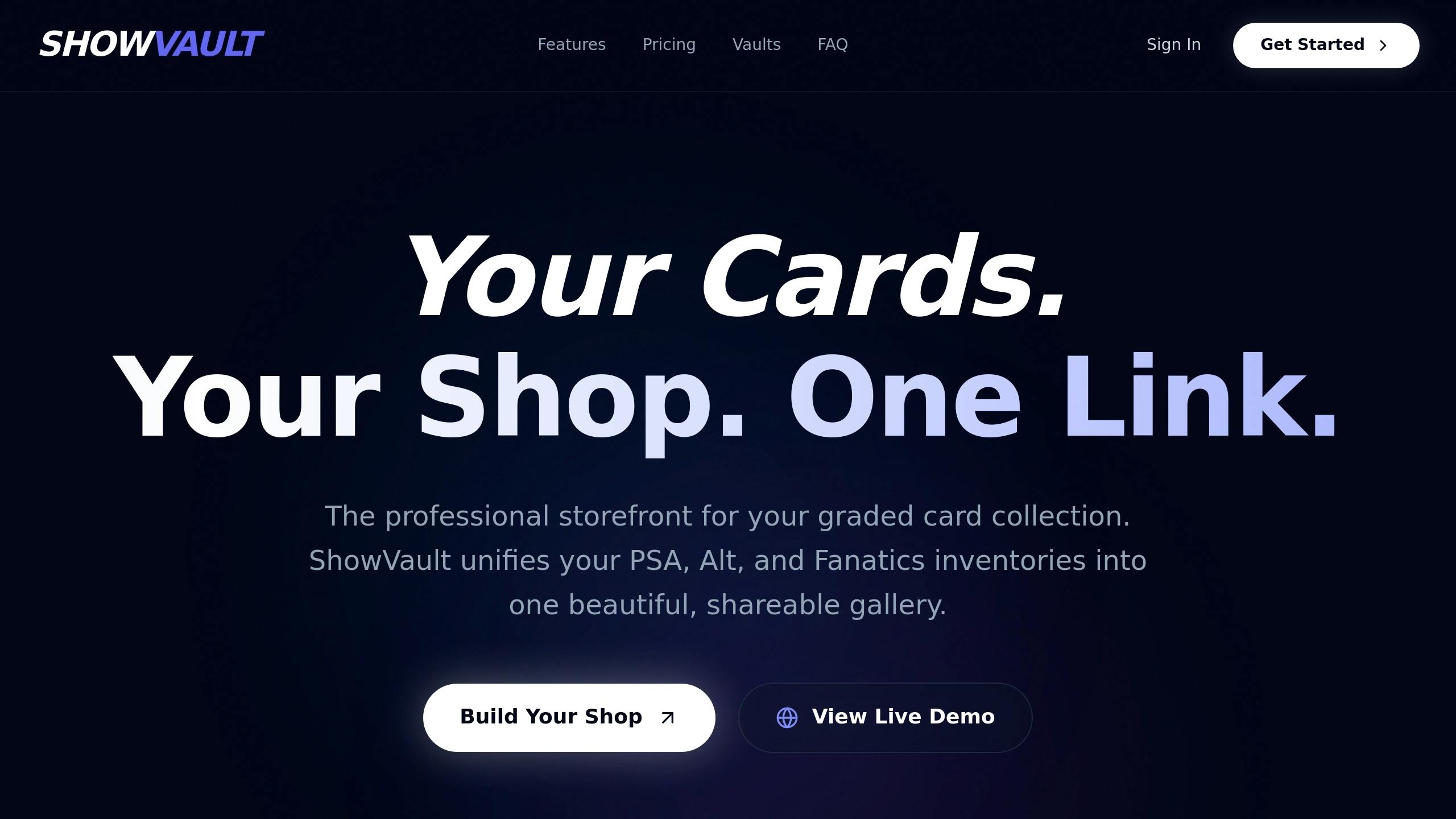
Digital storage has completely changed the way collectors manage their graded card collections. You can now access, track, and share your cards instantly - no need to worry about climate-controlled rooms or safe deposit boxes. Unlike physical storage, digital solutions free you from space and environmental concerns while offering immediate access to your collection.
ShowVault steps away from the traditional concept of physical vaulting. Instead of storing your cards in a third-party facility, ShowVault acts as a centralized dashboard, linking your existing digital vaults - like PSA, Alt, and Fanatics - into one platform. This setup means you can manage and view your entire collection across multiple services without logging in and out of different platforms. Below are the key reasons why collectors are gravitating toward this digital solution.
Advantages of Digital Storage with ShowVault
ShowVault simplifies collection management by consolidating multiple vaults into a single, easy-to-navigate view. If your cards are spread across platforms, ShowVault syncs them into one place, updating automatically to ensure your data is always current - no manual input required.
The platform also offers advanced privacy settings, giving you control over what information is public. You can create a storefront to display select cards while keeping the rest of your collection private. This flexibility allows you to share what you want with buyers or fellow collectors while safeguarding sensitive details like your portfolio's total value.
Another standout feature is the VaultBridge Sync, which automates updates and makes organizing your collection effortless. And because digital storage doesn’t rely on physical space, ShowVault can handle unlimited inventory. Whether your collection is modest or expansive, it’s all managed at a flat quarterly rate of $24.95 - no need to upgrade to a larger safe or rent extra storage.
Additionally, ShowVault includes an analytics dashboard that tracks trends, monitors value changes, and analyzes your inventory composition. You can export this data anytime for insurance claims, tax filings, or personal use - without ever touching a physical card.
| Advantage | Benefit |
|---|---|
| Multi-Vault Consolidation | Manage PSA, Alt, and Fanatics vaults in one place |
| Privacy Controls | Decide what to share publicly and what stays private |
| Automatic Sync | Updates your collection in real time, no manual work needed |
| Unlimited Scalability | Handle collections of any size for $24.95 per quarter |
| Analytics & Exports | Monitor trends and generate reports for insurance or tax purposes |
Limitations of Digital Storage
While the benefits of digital storage are clear, it’s not without its challenges. A stable internet connection is essential, as you can’t access your collection data offline. There’s also a $24.95 quarterly subscription fee. While this cost is relatively low compared to physical storage options like safes or climate-controlled units, it’s a recurring expense. If you stop paying, you’ll lose access to ShowVault’s features, though your cards will remain safe in their original digital vaults.
Occasional downtime is another potential drawback. Like any online service, ShowVault may experience technical issues that temporarily disrupt access.
| Limitation | Impact |
|---|---|
| Internet Required | No access to collection data without connectivity |
| Recurring Costs | Quarterly subscription fee of $24.95 |
| Potential Downtime | Temporary access issues during technical disruptions |
Physical vs Digital Storage Comparison
Deciding between physical and digital storage comes down to evaluating factors like security, accessibility, cost, scalability, and privacy. Physical storage gives you direct, private access to your items, but it also means you’re responsible for managing risks like theft, fire, or environmental damage. On the other hand, digital storage solutions, often housed in professional vaults, address these risks with features such as climate control, round-the-clock monitoring, UL-rated vault doors, and seismic detectors. Nat Turner, CEO of Collectors, highlights this advantage:
"The state-of-the-art Collectors Vault employs advanced security features, including 24/7/365 armed guards, Class 3 torch and tool-rated UL vault doors and cutting-edge seismic motion detectors." 8
When it comes to cost, the two storage methods diverge. Physical storage often involves a significant upfront investment in safes, protective cases, and environmental controls, along with additional insurance riders. These costs can add up quickly. In contrast, digital vaults typically offer free storage for graded cards, but they charge withdrawal fees. For instance, PSA charges $1.99 per item after 90 days, while Alt takes 1% of the card’s value, capped at $100 2 10. Another perk of digital vaults is that they usually include full insurance coverage at no extra cost. Some facilities, especially those in states like Delaware or Oregon, even offer sales tax advantages 9 1.
Accessibility is another key difference. With physical storage, you have immediate, hands-on access to your collection, but you can’t view or share it remotely. Digital storage solves this by providing 24/7 access to high-resolution scans on any device. Many platforms also integrate with online marketplaces, making it easier to sell items. However, retrieving physical cards from a digital vault requires shipping and may involve additional fees. Space is another consideration - physical storage is limited by the size of your home, while digital solutions can accommodate nearly unlimited collections.
These differences highlight the importance of matching your storage choice to your collection’s specific preservation and management needs. Here’s a quick comparison of the key factors:
| Criteria | Physical Storage | Digital Storage |
|---|---|---|
| Security | At risk from theft, fire, floods, and environmental damage | Protected by vaults with 24/7 guards, climate control, and UL-rated doors |
| Accessibility | Immediate physical access; no remote viewing | 24/7 digital access via apps; physical access requires shipping |
| Cost Structure | High upfront costs for safes and insurance | Free storage with withdrawal fees; insurance included |
| Scalability | Limited by available home space | Virtually unlimited capacity |
| Privacy | High privacy; no third-party records | Lower privacy; ownership tracked on platform servers |
Ultimately, the choice between physical and digital storage depends on your priorities, whether that’s hands-on access, streamlined digital management, or cost efficiency. Each option has its strengths, making it essential to weigh what matters most for your collection.
Which Storage Solution to Choose
Picking the right storage method depends on your collection's size, value, and what you plan to do with your cards. There’s no universal answer - it’s all about what works best for your needs and preferences.
When Physical Storage Works Best
Physical storage is ideal if you have a smaller or lower-value collection and enjoy hands-on access. If you love flipping through your cards, showing them to friends, or just having them close by without worrying about shipping delays, keeping your collection at home is a great option. Plus, you won’t have to deal with ongoing fees or shipping costs tied to digital storage.
This approach is also perfect for sentimental cards. Whether it’s a card from your childhood or one featuring a favorite player, having it nearby allows you to enjoy it every day. Just make sure your setup includes proper protection: invest in a quality safe, maintain climate control, and consider insurance to guard against theft, fire, or other potential damage.
When Digital Storage with ShowVault Works Best
Digital storage is a smart choice for high-value collectibles. Professional vaults offer top-tier security, including Class 3 UL-rated doors, 24/7 armed guards, and climate-controlled environments. This eliminates risks like water damage, humidity, or theft that could threaten your collection at home.
It’s also a great option for collectors who frequently buy and sell cards. Digital storage streamlines the selling process with integrated marketplaces, making it easy to list and sell cards without the hassle of photographing, packing, or shipping them yourself. If you live in a high-sales-tax state, vaults located in states like Delaware or Oregon can even help you avoid sales tax on purchases sent directly to the facility 9 1.
ShowVault takes digital storage to the next level by consolidating your vaulted collections from different platforms into a single dashboard. This gives you high-resolution access to your cards, simplifies inventory tracking, and lets you share your collection with others - all while keeping your data private. It’s an excellent solution for collectors looking for both security and convenience.
Using Both Physical and Digital Storage
For many collectors, a hybrid approach offers the best balance. Store your high-value investment cards in a professional vault for maximum security and easy marketplace access. Meanwhile, keep cards with sentimental value or those you want to display at home, where you can enjoy them daily.
This strategy combines the protection of digital vaulting with the personal satisfaction of physical storage. You’re also not locked into one method - cards can move between physical and digital storage as your goals shift. Whether you’re focusing on long-term investments or building a display-worthy collection, this flexible approach adapts to your evolving needs.
Ultimately, the right choice depends on how each card fits into your collecting journey. Investment pieces thrive in vaults, while personal favorites belong where you can appreciate them the most.
Conclusion
Deciding on the best storage solution for your graded card collection comes down to what works for your specific situation. Physical storage allows for immediate access and personal enjoyment but comes with risks like potential damage, theft, and the hassle of managing sales manually. On the other hand, digital vaulting provides bank-level security, full insurance coverage, and round-the-clock marketplace access - without the need to photograph, pack, or ship the cards yourself 9.
Professional vaults offer proven security and ease of liquidity on a large scale. For instance, PSA currently oversees over 1.6 million items valued at more than $650 million, with over 1.2 million successfully sold through their system 9. This kind of track record highlights the reliability of vaulting services, especially for protecting and trading high-value cards. These benefits make hybrid storage strategies worth considering.
Platforms like ShowVault simplify managing vaulted collections by consolidating everything into a single dashboard. Features like high-resolution card access, real-time inventory tracking, and the ability to share your collection publicly (while keeping personal details private) make it a professional solution. At $24.95 per quarter, it offers collectors a streamlined way to oversee their investments.
For many collectors, a hybrid approach strikes the right balance. High-value, investment-grade cards can be securely vaulted and ready for sale, while sentimental favorites stay at home for personal enjoyment. This flexibility allows your strategy to evolve as your collection grows and your goals shift. Ultimately, there isn’t a one-size-fits-all solution.
The key is aligning each card with its purpose. Whether you’re focused on building long-term value or curating a collection for personal satisfaction, understanding your options helps you manage and protect your cards effectively.
FAQs
Which cards should I vault vs keep at home?
When deciding how to store your cards, focus on their value, rarity, and condition. Cards that are high in value, rare, or professionally graded should ideally be stored in a secure, climate-controlled vault to ensure maximum protection. For less valuable or more frequently handled cards, protective sleeves or sturdy storage boxes at home can suffice. Combining these methods - vaulting the most precious cards while keeping others at home - can help you balance security with convenience, tailored to your collection’s specific needs.
How do I get my vaulted cards shipped to me?
To get your vaulted cards shipped, start by logging into your storage platform account. From there, select the cards you want to have sent and follow the platform's specific steps. This often involves generating a shipping label or submitting a withdrawal request. The platform will then package your cards, insure them, and ship them to the address you provide. For high-value cards, make sure to select a shipping option that includes sufficient insurance to protect your investment.
How private is my collection on ShowVault?
Your collection on ShowVault is kept safe and private with top-tier security measures. The platform ensures protection through 24/7 monitoring and insured storage, giving you peace of mind about your assets.
With ShowVault, you can privately organize and manage your collection. Features like real-time updates, detailed item views, and high-resolution images make it easy to keep track of everything. Plus, you have complete control over visibility - your collection stays private unless you choose to share it selectively, based on your preferences.
Sources
1. https://support.alt.xyz/en/articles/9213530-the-alt-vault
2. https://psacard.com/info/psa-vault
3. https://cardhoundvintage.com/safe-display-and-storage
6. https://vaultedcollection.com/blogs/vaulted-blog/ultimate-guide-trading-card-grading-and-display
7. https://cardlines.com/sports-card-storage